Chola Dynasty: Architecture, Naval Dominance & Cultural Empire
📜 Executive Heritage Snapshot
📍 Heritage Atlas & Geographic Location
🌟 UNESCO World HeritageThe Imperial Chola dynasty (c. 850 – 1279 CE) represents the pinnacle of South Indian political consolidation, temple architecture, bronze sculpture, and maritime oceanic expansion. From their capital in the fertile Kaveri river delta, the Cholas transformed the Bay of Bengal into what historians frequently term a "Chola Lake", projecting military, religious, and commercial power across Sri Lanka, the Maldives, Sumatra, the Malay Peninsula, and Java.
Equally revolutionary was their domestic statecraft: under their patronage, local village democracy reached an institutional maturity through the Kudavolai electoral system, immortalized in the famous stone inscriptions of Uttaramerur.
1. Chronological Horizon: The Imperial Kings
| Ruler | Regnal Dates | Key Historical Achievements |
|---|---|---|
| Vijayalaya Chola | c. 850 – 871 CE | Captured Thanjavur from the Mutharayars; laid the foundation of the Imperial Chola line. |
| Parantaka I | 907 – 955 CE | Defeated the Pandyas; covered the sanctum of Chidambaram Nataraja in gold; inscribed the Uttaramerur local governance charter. |
| Rajaraja Chola I | 985 – 1014 CE | Subjugated the Cheras, Pandyas, and Northern Sri Lanka (Anuradhapura); conducted nationwide land survey; constructed the Brihadeeswarar Temple. |
| Rajendra Chola I | 1014 – 1044 CE | Marched to the banks of the Ganga (Gangaikonda Chola); dispatched naval armada conquering Srivijaya in Southeast Asia; built Gangaikonda Cholapuram. |
| Kulottunga I | 1070 – 1122 CE | United the Chola and Eastern Chalukya bloodlines; abolished transit customs duties (Sungam Tavirtta Cholan); dispatched trade embassies to China. |
| Rajaraja II | 1146 – 1173 CE | Patronized the Airavatesvara Temple at Darasuram; sustained Chola artistic and literary refinement. |
2. Architectural Zenith: The Great Living Chola Temples
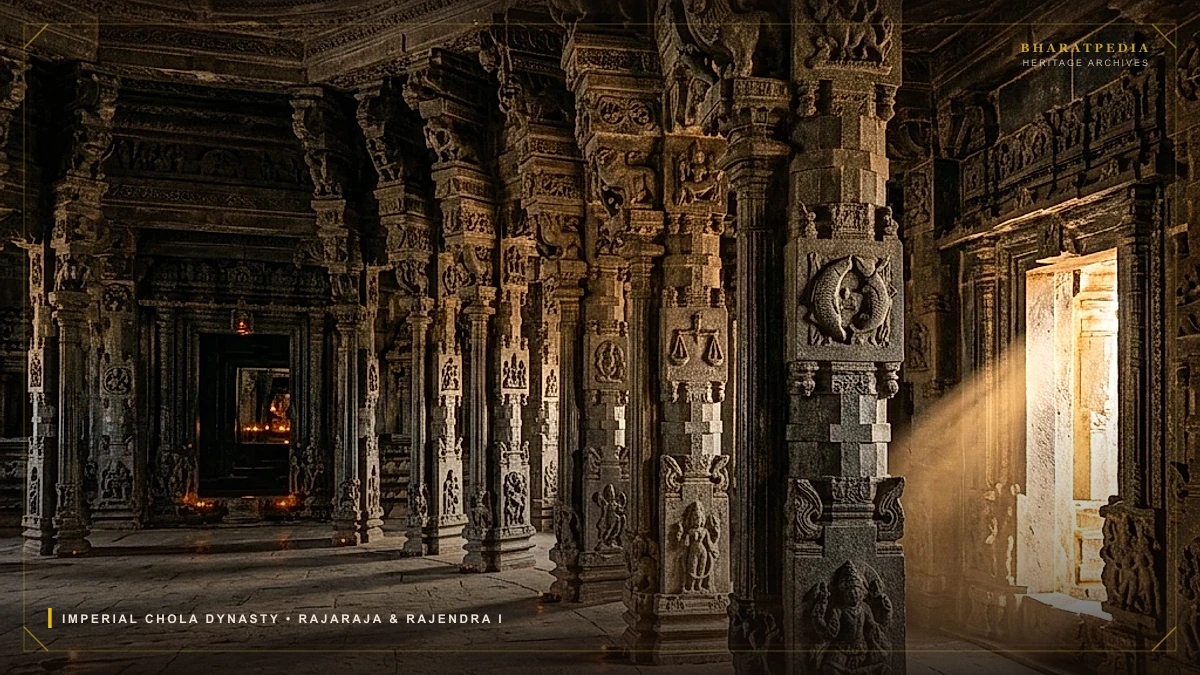
Chola temple architecture represents the culmination of the Dravidian architectural idiom, characterized by soaring pyramidal spires (vimanas), massive enclosure walls (prakaras), and sculpted pillared halls (mandapas). The UNESCO World Heritage designation for the "Great Living Chola Temples" covers three monumental shrines:
1. Brihadeeswarar Temple (Thanjavur) — Completed 1010 CE
Commissioned by Rajaraja I to celebrate his military conquests, the Peruvudaiyar Kovil represents an engineering triumph without parallel in the medieval world:
- The Soaring Vimana: Unlike later South Indian temples where the entrance gateway (gopuram) dominates, here the primary tower over the sanctum (vimana) rises 66 meters (216 feet) into the sky in thirteen receding tiers.
- The Monolithic Kumbam: The spire is crowned by a colossal octagonal granite dome (kumbam) weighing an estimated 81.3 tonnes, hauled to the top along an earthen inclined ramp extending nearly 6 kilometers from the village of Sarapallam.
- Mortarless Interlocking Granite: Constructed entirely of fine-grained hard granite transported from quarries over 50 kilometers away, held together by gravity, precision interlocking joints, and stone tongues.
2. Brihadisvara Temple (Gangaikonda Cholapuram) — c. 1035 CE
Built by Rajendra I to commemorate his northern campaign to the River Ganga:
- Features a softer, concave curvilinear contour rather than the rigid straight pyramid of Thanjavur, lending it a graceful, dynamic feminine aesthetic.
- Adjacent to the temple, Rajendra excavated the Chola-gangam, an enormous artificial reservoir measuring 22 kilometers in length, filled with waters symbolizing the holy Ganga.
3. Airavatesvara Temple (Darasuram) — c. 1160 CE
Constructed by Rajaraja II:
- Built in the form of a celestial stone chariot (ratha) drawn by galloping stone horses and caparisoned elephants.
- Houses intricate miniature friezes depicting the lives of the 63 Shaivite Nayanmar saints and step-treads carved as musical stones that resonate with melodic frequencies.
3. Oceanic Dominance: The Chola Navy & The Srivijaya Expedition
While ancient Indian merchants had traded across the Indian Ocean since antiquity, the Cholas were the first Indian imperial power to maintain a formal, state-commissioned standing high-seas navy (Kappal-padai).
The Srivijaya Naval Campaign (1025 CE)
The Srivijaya Empire (controlling modern Sumatra, Java, and the Strait of Malacca) levied exorbitant transit tolls on Indian merchant guilds (Manigramam and Ayyavole) trading with Song-dynasty China. In response, Rajendra Chola I assembled a fleet of hundreds of multi-decked warships:
- Cross-oceanic navigation: Leveraging the seasonal northeast monsoon winds, Chola war armadas sailed 2,000 nautical miles across the Bay of Bengal.
- Naval Conquests: Chola inscriptions record the capture of fourteen strategic ports, including Kadaram (Kedah, Malaysia), Sri Vijaya (Palembang, Sumatra), Pannai (East Sumatra), and Malaiyur (Jambi).
- The King of Srivijaya, Sangrama-Vijayottungavarman, was captured along with his royal jewel-studded gates and golden throne.
- Rather than establishing direct colonial administration, Rajendra enforced a tributary treaty, restored the native ruler to the throne, and established permanent diplomatic embassies in China (Song dynasty archives confirm the arrival of Chola tribute missions in 1015, 1033, and 1077 CE).
4. The Lost-Wax Bronze Sculpture: Nataraja Iconography
Under Chola royal patronage—particularly catalyzed by the visionary Queen Dowager Sembiyan Mahadevi—South Indian metal casters perfected the lost-wax technique (madhuchchishtavidhana / cire perdue), producing hollow and solid bronzes revered as the zenith of Asian plastic art.
The Chola Nataraja (Lord of the Cosmic Dance)
The iconic image of Shiva dancing in the circle of cosmic flames (anandatandava) embodies five cosmic activities (panchakritya):
- Creation (Srishti): Signified by the hourglass-shaped hand-drum (damaru) held in the upper right hand, pulsing the rhythm of time.
- Preservation (Sthiti): Indicated by the lower right hand extended in the gesture of fearlessness (abhayamudra).
- Destruction (Samhara): Embodied by the flame of cosmic dissolution (agni) resting in the upper left palm.
- Illusion (Tirobhava): Symbolized by the right foot trampling the dwarf demon Apasmara Purusha (representing spiritual ignorance).
- Liberation (Anugraha): Conveyed by the uplifted left leg and the lower left hand gesturing diagonally across the torso (gajahastamudra), pointing to spiritual freedom.
5. Local Democracy: The Uttaramerur Inscriptions
Engraved on the granite walls of the Vaikunta Perumal temple at Uttaramerur (Kanchipuram district) are two imperial edicts issued in 919 CE and 921 CE during the reign of King Parantaka I. These inscriptions detail the operational constitution of the village assembly (sabha).
The Kudavolai (Pot-Ticket) System
The village was demarcated into thirty wards (kudumbus). For annual administrative governance, candidates were selected via an electoral lottery:
- Name tickets made from palm leaves (olai) were placed into an earthen clay pot (kuda).
- In the presence of the assembled elders in the temple mandapa, a young child picked one leaf per ward to form the governing council.
Stringent Qualifications & Disqualifications
To be eligible for the governing council, a candidate was required to:
- Own at least one-fourth veli of taxable land and reside on his own house-site.
- Be between the ages of thirty-five and seventy.
- Demonstrate proficiency in the Vedic texts and administrative codes.
Mandatory Disqualifications (Anti-Corruption Safeguards):
- Anyone who had served on a committee (variyam) during the previous three years was barred from standing, preventing political entrenchment.
- Anyone who had failed to submit public audited accounts for his previous committee tenure—or whose close relatives (sons, brothers, sons-in-law) had committed financial fraud—was permanently disqualified.
6. UPSC GS-1 Examination Master Key
High-Yield Prelims Pointers
- Chola Land Revenue Assessment: Known as Kani-kadan; conducted with precision under Rajaraja I using standardized measuring rods (Vetti).
- Merchant Guilds: Famous autonomous overseas merchant bodies included the Manigramam, Ayyavole-500 (Ainurruvar), and Nanadesi.
- Chola Capital Cities: Early capital at Uraiyur, moved to Thanjavur under Vijayalaya, and subsequently to Gangaikonda Cholapuram under Rajendra I.
- The Great Living Chola Temples (UNESCO 1987 & 2004): Brihadeeswarar (Thanjavur), Brihadisvara (Gangaikonda Cholapuram), and Airavatesvara (Darasuram).
Mains Analytical Discussion Framework
Question: "The Chola state demonstrated an extraordinary equilibrium between centralized oceanic imperial power and deeply decentralized grassroots local democracy. Elaborate with epigraphical and architectural evidence."
Structure your answer around:
- Centralized Imperial Cohesion: Monumental state-sponsored engineering (Brihadeeswarar vimana), standardized royal land surveys (Kani-kadan), and maritime naval capability that commanded Bay of Bengal sea lanes.
- Grassroots Decentralized Autonomy: The Uttaramerur inscriptions demonstrate that everyday judicial, agricultural, irrigation (Eri-variyam), and taxation functions were executed autonomously by village assemblies (Sabha for Brahmadeya lands, Ur for peasant villages, and Nagaram for merchant towns).
- Significance for Modern Governance: The Chola institutional model illustrates that strong national defense and state infrastructure do not require suppressing local democratic participation.
UPSC Civil Services Syllabus Correlation
This topic maps directly to General Studies Paper 1 (Indian Heritage and Culture, History). Aspirants should review the primary inscriptions, architectural elevation (Vimana/Shikhara), and socio-economic governance models cited above.
Access Full UPSC GS-1 Art & Culture Syllabus Index →Curated by researchers in Indian archaeology, epigraphy, and military history. Grounded in ASI excavation papers, Epigraphia Indica, and primary numismatics.
Related Civilizational Explorations
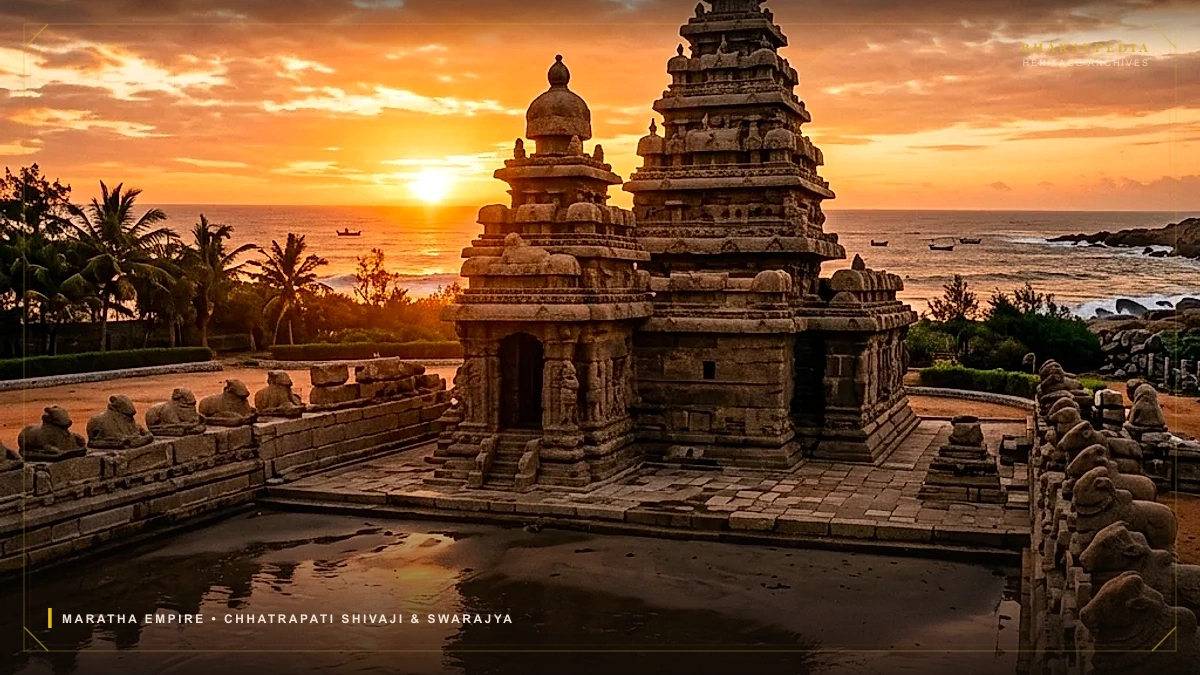
Maratha Empire: Timeline, Rulers, Ganimi Kava & Civilizational Legacy
A comprehensive historical study of the Maratha Empire: Chhatrapati Shivaji Maharaj's coronation at Raigad, the Ashta Pradhan council, Ganimi Kava guerilla warfare, Peshwa Baji Rao's northern expansion, the Third Battle of Panipat (1761), and the Maratha Confederacy.
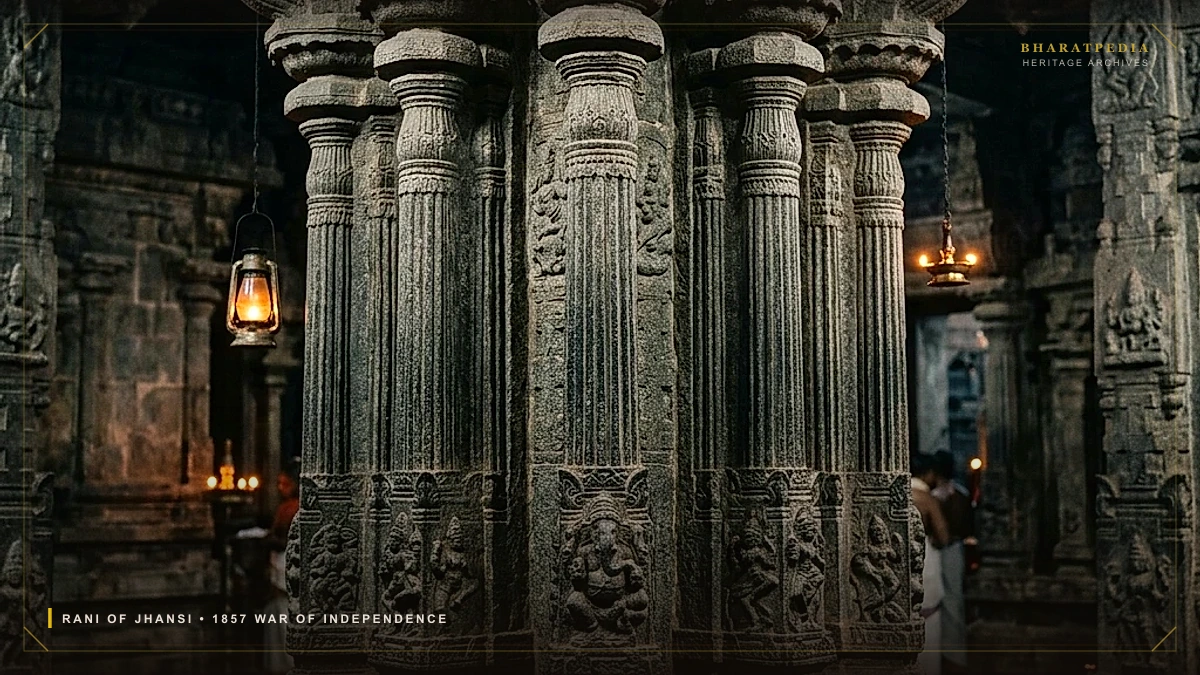
Rani of Jhansi: Complete History & Leadership in the 1857 Revolt
The heroic history of Rani Lakshmibai of Jhansi: her resistance to Lord Dalhousie's Doctrine of Lapse, the siege and defense of Jhansi Fort, the tactical escape to Kalpi and Gwalior, and her martyrdom at Kotah-ki-Serai in the 1857 War of Independence.
The Maratha Navy & Sarkhel Kanhoji Angre: Asymmetric Littoral Warfare in the Arabian Sea
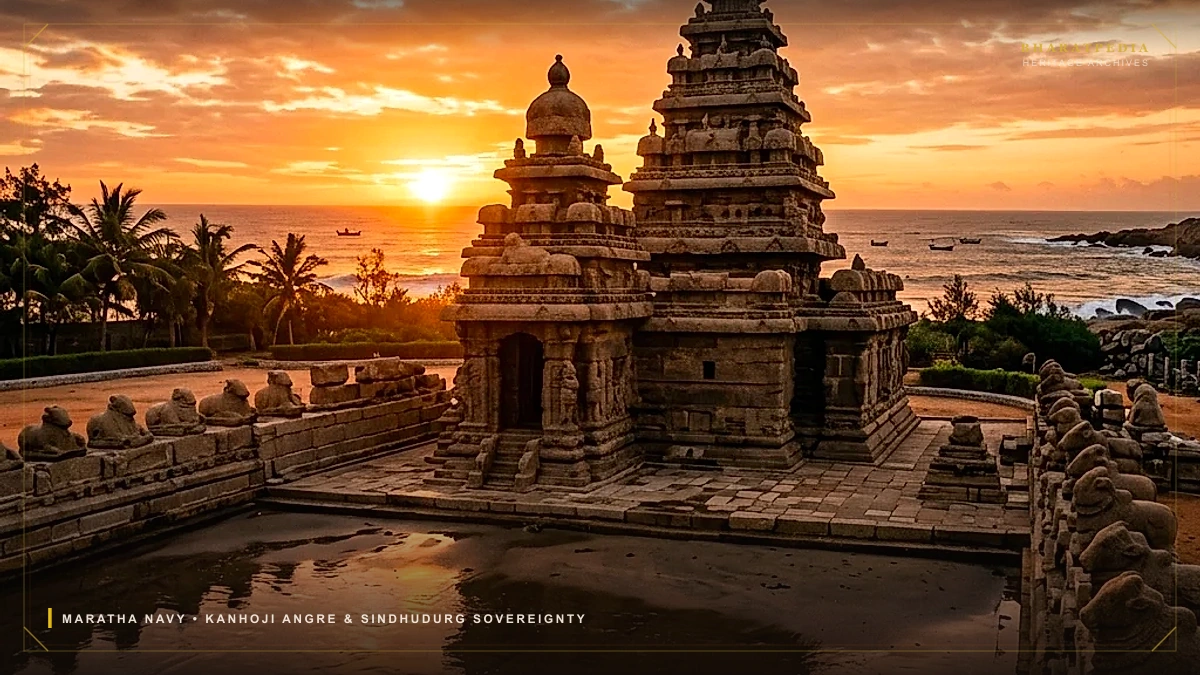
How Grand Admiral Sarkhel Kanhoji Angre defended the Konkan coast for 40 years: indigenous Gurab and Galbat war vessels, impregnable island forts like Vijaydurg and Sindhudurg, and asymmetric naval tactics against British, Dutch, and Portuguese armadas.