
Hampi: A Complete History & Architectural Guide to the Vijayanagara Capital
📜 Executive Heritage Snapshot
📍 Heritage Atlas & Geographic Location
🌟 UNESCO World HeritageSet amidst a surreal, boulder-strewn landscape along the banks of the Tungabhadra River in Karnataka, Hampi represents the ruins of Vijayanagara—the "City of Victory." Established in 1336 CE, it grew into one of the largest and wealthiest metropolises of the medieval world, serving as the cultural and military bastion of South India for more than two centuries.
In the fifteenth and sixteenth centuries, foreign travelers from across the globe arrived in awe. Persian ambassador Abdur Razzaq wrote in 1443: "The city of Bijanagar is such that the pupil of the eye has never seen a place like it, and the ear of intelligence has never been informed that there existed anything to equal it in the whole world."
Today recognized as a UNESCO World Heritage Site, Hampi's 4,100 hectares contain over 1,600 surviving monuments, showcasing the crowning synthesis of South Indian architectural traditions.
1. Chronological Horizon: The Four Dynasties
The Vijayanagara Empire was governed by four successive ruling houses:
| Dynasty | Period | Key Historical Milestones |
|---|---|---|
| Sangama Dynasty | 1336 – 1485 CE | Founded by brothers Harihara I and Bukka Raya I under the spiritual guidance of Sage Vidyaranya; fortified Hampi and secured the Tungabhadra-Krishna doab. |
| Saluva Dynasty | 1485 – 1505 CE | Brief transitional rule under Saluva Narasimha; consolidated borders against regional sultanates. |
| Tuluva Dynasty | 1505 – 1570 CE | Imperial apex under Emperor Krishnadevaraya (1509–1529 CE); military mastery, literary explosion (Ashtadiggajas), monumental temple constructions. |
| Aravidu Dynasty | 1570 – 1646 CE | Founded by Tirumala Deva Raya following the 1565 catastrophe of Talikota; capital relocated south to Penukonda and Chandragiri. |
2. The Architectural Genius of Vijayanagara
Vijayanagara architecture developed a distinctive imperial idiom that seamlessly blended elements of earlier Chalukya, Hoysala, Chola, and Kakatiya styles with innovative structural engineering:
- Hard Granite Construction: Unlike the delicate soapstone (chloritic schist) favored by the Hoysalas of Belur, Vijayanagara stonemasons mastered the intractable, coarse-grained local granite boulders of the Deccan plateau.
- The Kalyana Mandapa: A lavish open ceremonial hall supported by elaborately carved pillars, built exclusively for celebrating the divine wedding (kalyanotsava) of the presiding deity.
- Pillared Pillars & Rearing Yali Capitals: Giant granite columns carved with rearing mythical lion-beasts (Yali) ridden by armed warriors, bursting with dynamic kinetic tension.
- Indo-Islamic Synthesis in Secular Civic Architecture: While temples remained strictly classical Dravidian, civic structures in the Royal Enclosure (such as the Lotus Mahal and Elephant Stables) adopted cusped arches, vaults, and ribbed plaster domes derived from Sultanate courtly architecture.
3. Monumental Highlights of the Sacred Center
1. Virupaksha Temple Complex
The spiritual heartbeat of Hampi that pre-dates the empire and remains an active, living place of worship:
- Dedicated to Lord Shiva as Virupaksha (Pampa-pati), consort of the local river goddess Pampa.
- Dominated by a soaring 50-meter-high eastern entrance tower (Raja Gopuram), rising in nine stepped tiers.
- The Inverted Shadow Phenomenon: Inside a darkened chamber behind the sanctum, a pinhole aperture in the stone wall projects a crisp, inverted optical shadow of the massive exterior gopuram onto the interior wall—demonstrating a sophisticated practical understanding of camera obscura optics.
2. Vittala Temple & The Monolithic Stone Chariot
Located 3 kilometers east of Virupaksha, the Vittala complex represents the artistic climax of the Vijayanagara school:
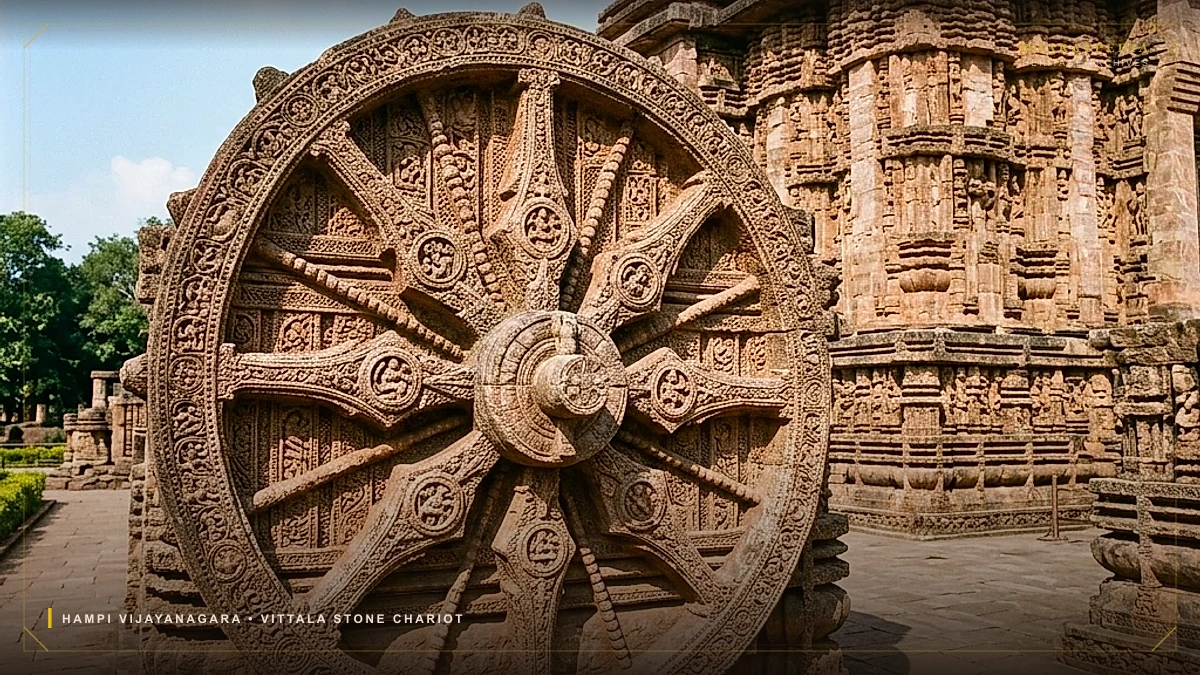
- The Stone Chariot (Garuda Shrine): Standing in the temple courtyard, this iconic shrine is carved to mimic an imperial wooden processional chariot. Though appearing monolithic, it was assembled from finely fitted granite slabs with joints concealed behind decorative rosettes. The stone wheels were originally designed to rotate on their granite axles.
- The Musical Pillars of the Ranga Mandapa: The central hall features 56 monolithic composite columns. Each main pillar is encircled by clusters of slender sub-pillars carved from a single block of resonant granite. When tapped lightly with the knuckles, these resonant stone columns ring out distinct musical notes corresponding to the seven swaras of classical Carnatic music.
3. Hazara Rama Temple
Located at the threshold of the Royal Center, this private chapel of the Vijayanagara kings features exterior walls carved with continuous narrative friezes depicting the complete story of the Ramayana in stone relief across multiple horizontal bands.
4. The Royal Center & Hydraulic Marvels
The Mahanavami Dibba
An enormous three-tiered pyramidal granite platform rising 12 meters high, where the Emperor sat in state during the ten-day autumn festival of Mahanavami (Dussehra). Portuguese horse merchants Domingo Paes and Fernão Nunes described the platform being draped in cloth of gold, surrounded by royal elephants, foreign ambassadors, and wrestling tournaments.
The Stepped Tank (Pushkarani)
Excavated in the 1980s by the Archaeological Survey of India (ASI), this perfectly symmetrical subterranean tank is built of fine black schist stone. Its stepped geometry forms a cascading, self-cleaning water basin fed by elevated stone aqueducts that transported river water across kilometers using gravity flow.
Elephant Stables & Lotus Mahal
- Elephant Stables: An imposing row of eleven domed chambers designed to house the royal ceremonial state elephants, featuring alternating ribbed, circular, and octagonal domes showing sophisticated Islamic arch engineering.
- Lotus Mahal: A two-storied open pavilion featuring cusped geometric arches, stucco plaster rosettes, and an ingenious natural cooling water conduit running through the ceiling masonry.
5. The Fall of the City: The Battle of Talikota (1565 CE)
In January 1565, the four rival Deccan Sultanates (Bijapur, Golconda, Ahmadnagar, and Bidar) set aside their longstanding enmities and formed a grand confederacy to challenge the overweening power of the Vijayanagara de facto ruler, Aliya Rama Raya.
The Catastrophe at Rakshasi-Tangadi
The armies clashed at the Battle of Talikota (Rakshasi-Tangadi) along the Krishna River. During the climax of the battle, two key mercenary commanders in the Vijayanagara vanguard defected to the Sultanate coalition:
- Rama Raya was captured on the battlefield and summarily executed.
- The remaining royal family under Tirumala Deva Raya fled south with the royal treasury to Penukonda, abandoning the capital.
- Victorious armies occupied the defenseless metropolis for six months, systematically setting fire to timber ceilings, toppling monolithic statues (including defacing the monolithic Narasimha), and dismantling the trade apparatus. The great city never recovered.
6. UPSC GS-1 Examination Master Key
High-Yield Prelims Pointers
- Founding Monarchs: Harihara I and Bukka Raya I (1336 CE), belonging to the Sangama dynasty.
- Spiritual Patron: Sage Vidyaranya of the Sringeri Sharada Peetham.
- Foreign Accounts of Hampi:
- Nicolo de Conti (Italian, 1420): Visited under Deva Raya I.
- Abdur Razzaq (Persian, 1443): Visited under Deva Raya II.
- Domingo Paes & Duarte Barbosa (Portuguese, 1520s): Visited under Krishnadevaraya.
- Fernão Nunes (Portuguese, 1530s): Visited under Achyuta Deva Raya.
- Amuktamalyada: Celebrated Telugu epic poem composed by Krishnadevaraya detailing the life of the Tamil poet-saint Andal and statecraft (Rajniti).
- Ashtadiggajas: The council of eight legendary Telugu poets in Krishnadevaraya's court, led by Allasani Peddana and Tenali Ramakrishna.
Mains Analytical Discussion Framework
Question: "Analyze how the architectural and urban design of Hampi reflected both the geopolitical imperatives and the cosmopolitan economic realities of the Vijayanagara Empire."
Structure your answer around:
- Strategic Topography: Exploitation of natural granite boulder ridges as defensive ramparts; utilizing the Tungabhadra river gorge as an impassable northern moat.
- Hydraulic Self-Sufficiency: The integration of aqueducts, check-dams (such as the Turtha canal), and stepped tanks (Pushkaranis) ensured the fortified city could withstand prolonged sieges without starving.
- Pluralistic Architectural Synthesis: The coexistence of orthodox Dravidian shrines (Vittala, Virupaksha) with Indo-Islamic secular pavilions (Elephant Stables, Lotus Mahal) proves that Vijayanagara was not an isolated enclave, but a cosmopolitan trade hub that absorbed global engineering techniques.
UPSC Civil Services Syllabus Correlation
This topic maps directly to General Studies Paper 1 (Indian Heritage and Culture, History). Aspirants should review the primary inscriptions, architectural elevation (Vimana/Shikhara), and socio-economic governance models cited above.
Access Full UPSC GS-1 Art & Culture Syllabus Index →Curated by researchers in Indian archaeology, epigraphy, and military history. Grounded in ASI excavation papers, Epigraphia Indica, and primary numismatics.
Related Civilizational Explorations
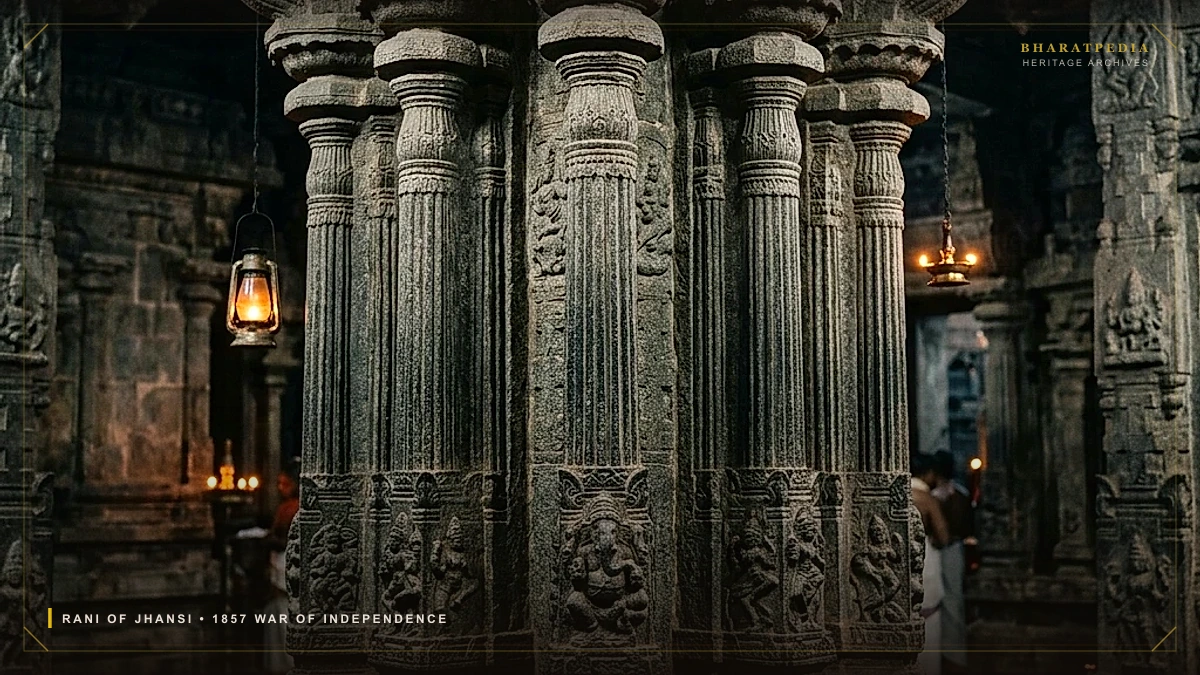
Rani of Jhansi: Complete History & Leadership in the 1857 Revolt
The heroic history of Rani Lakshmibai of Jhansi: her resistance to Lord Dalhousie's Doctrine of Lapse, the siege and defense of Jhansi Fort, the tactical escape to Kalpi and Gwalior, and her martyrdom at Kotah-ki-Serai in the 1857 War of Independence.
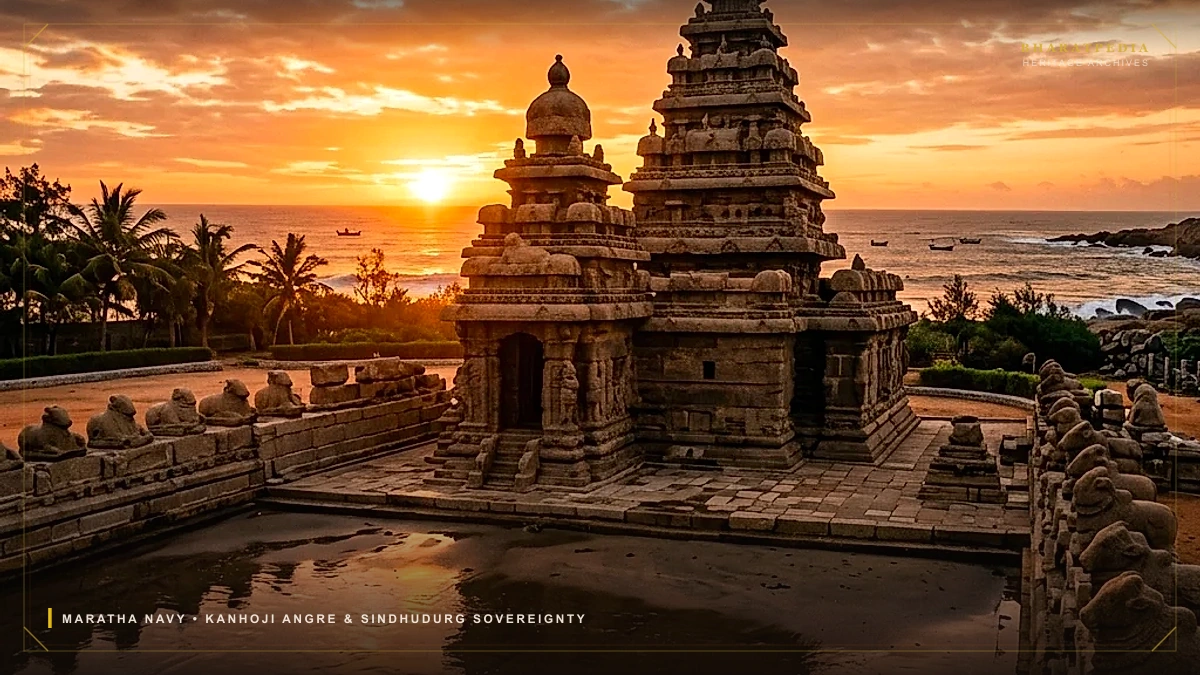
The Maratha Navy & Sarkhel Kanhoji Angre: Asymmetric Littoral Warfare in the Arabian Sea
How Grand Admiral Sarkhel Kanhoji Angre defended the Konkan coast for 40 years: indigenous Gurab and Galbat war vessels, impregnable island forts like Vijaydurg and Sindhudurg, and asymmetric naval tactics against British, Dutch, and Portuguese armadas.
Maratha Empire: Timeline, Rulers, Ganimi Kava & Civilizational Legacy
A comprehensive historical study of the Maratha Empire: Chhatrapati Shivaji Maharaj's coronation at Raigad, the Ashta Pradhan council, Ganimi Kava guerilla warfare, Peshwa Baji Rao's northern expansion, the Third Battle of Panipat (1761), and the Maratha Confederacy.