
Modhera Sun Temple: Solanki Architectural Geometry & Solar Equinox Alignment
📜 Executive Heritage Snapshot
📍 Heritage Atlas & Geographic Location
🛡️ ASI Protected MonumentSituated along the serene banks of the Pushpavati River in Gujarat's Mehsana district, the Sun Temple at Modhera stands as the crowning jewel of the Maru-Gurjara (Solanki) architectural style. Built in 1026–1027 CE by King Bhima I of the Solanki (Chalukya) dynasty, this protected monument was designed not merely as a sanctuary for worship, but as an astronomical instrument aligned with solar mathematics.
Constructed without binding mortar using fine golden sandstone, the temple was engineered so that during the vernal and autumnal equinoxes, the first golden rays of the rising sun passed through the pillared halls to illuminate the inner sanctum of the Sun God Surya.
1. Architectural Anatomy: The Three Sacred Axes
The temple complex is laid out along an exact east-west astronomical axis, comprising three integrated structural entities:
[Surya Kunda (Stepped Tank)] ──► [Sabha Mandapa (Assembly Hall)] ──► [Guda Mandapa (Sanctum)]
       (Water Element)                   (Cosmic Dance Hall)                 (Solar Heart)
1. Surya Kunda (Rama Kunda)
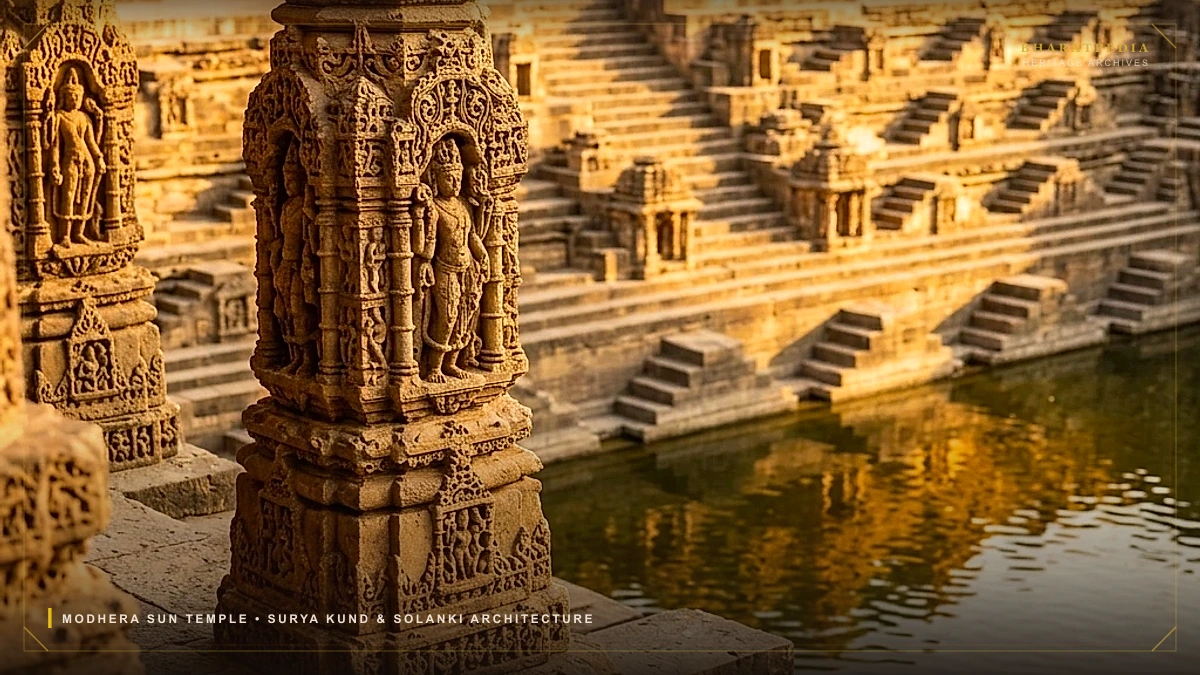
An expansive rectangular stepped reservoir measuring 53.6 × 36.6 meters:
- Descending in cascading geometric terraces, the tank houses 108 miniature carved shrines dedicated to various manifestations of Surya, Ganesha, Shiva, and Vishnu along its steps.
- The pyramidal steps demonstrate the mathematical genius of Gujarati hydraulic architecture, providing safe, aesthetic access to water regardless of seasonal fluctuations.
2. Sabha Mandapa (The Hall of Cosmic Gathering)
An open, octagonal assembly pavilion open on all four sides:
- Supported by 52 exquisitely carved sandstone pillars, representing the 52 weeks of the solar calendar year.
- The pillars are linked by cusped, scalloped arches (toranas) resembling hanging garlands of stone, carved with scenes from the Ramayana, Mahabharata, and the solar journey across the twelve zodiacs (Adityas).
3. Guda Mandapa (The Inner Sanctum)
The enclosed shrine housing the circumambulatory corridor (pradakshina-patha) and the sanctum sanctorum (garbhagriha):
- Rests on an inverted lotus plinth (padmapitha).
- Placed upon the Tropic of Cancer latitude line (historically ~23.58° N), allowing the morning equinox sunbeams to penetrate directly into the deepest sanctuary chamber.
2. Solar Astronomy in Stone: The Equinox Alignment
The architectural orientation of Modhera demonstrates advanced observational astronomy:
- On March 21 (Vernal Equinox) and September 23 (Autumnal Equinox), the sun rises precisely at true geographical east.
- As the dawn sun clears the horizon, its rays reflect off the calm waters of the Surya Kunda, stream through the eastern torana gateway, traverse the central aisle of the 52-pillared Sabha Mandapa, and strike the threshold of the Guda Mandapa.
- Inside the darkened sanctum, the light originally struck a diamond set into the golden crown of the central Surya idol, illuminating the entire chamber in a radiant golden glow.
3. UPSC GS-1 Examination Takeaways
- Architectural Style: Maru-Gurjara style (also called Solanki style), characterized by lavish surface ornamentation, torana entrance arches, and stepped kunda reservoirs.
- Patron Monarch: King Bhima I (reigned 1022–1064 CE), who also rebuilt the sacred Somnath Temple after the Ghaznavid raid.
- Inscriptional Evidence: A hidden upside-down inscription on the back wall of the sanctum reads Vikram Samvat 1083 (1026–1027 CE).
- Modern Landmark: In October 2022, Modhera was declared India's first 24x7 solar-powered village, pairing 1,000-year-old solar worship with clean 21st-century renewable energy.
UPSC Civil Services Syllabus Correlation
This topic maps directly to General Studies Paper 1 (Indian Heritage and Culture, History). Aspirants should review the primary inscriptions, architectural elevation (Vimana/Shikhara), and socio-economic governance models cited above.
Access Full UPSC GS-1 Art & Culture Syllabus Index →Curated by researchers in Indian archaeology, epigraphy, and military history. Grounded in ASI excavation papers, Epigraphia Indica, and primary numismatics.
Related Civilizational Explorations
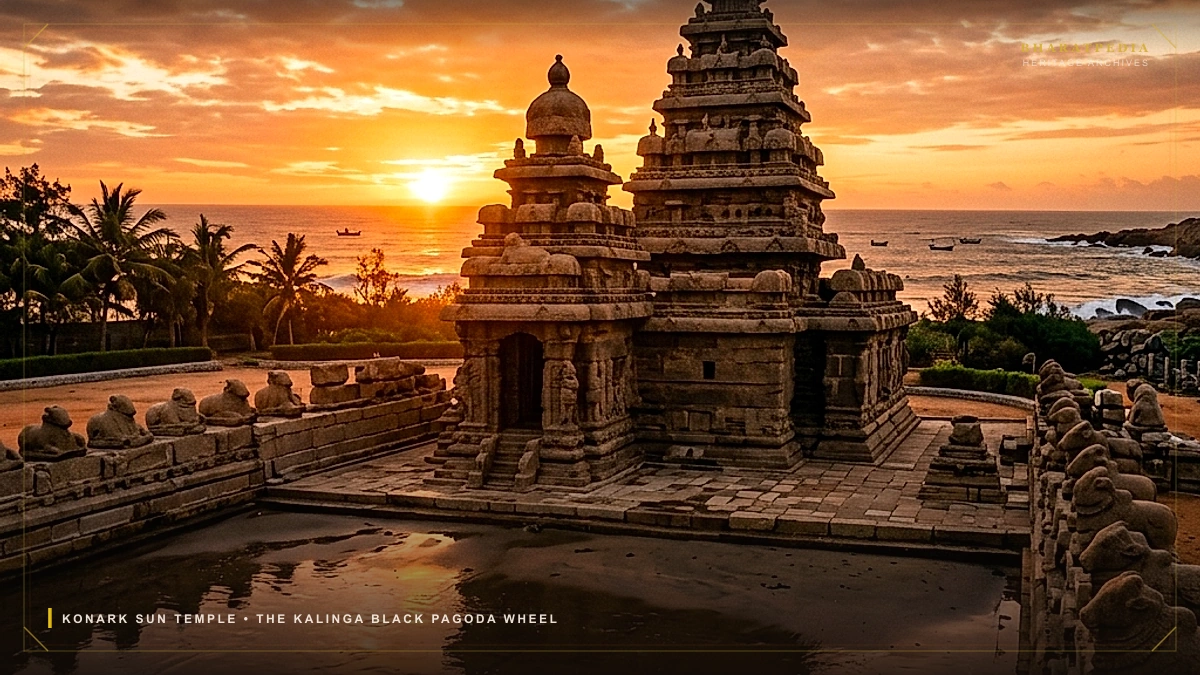
Konark Sun Temple: The Black Pagoda & Kalinga Astronomical Architecture
The architectural genius of the Konark Sun Temple in Odisha: King Narasimhadeva I's colossal stone chariot, the 24 astronomical sundial wheels, the Kalinga Deula style, and the maritime legend of the Black Pagoda.
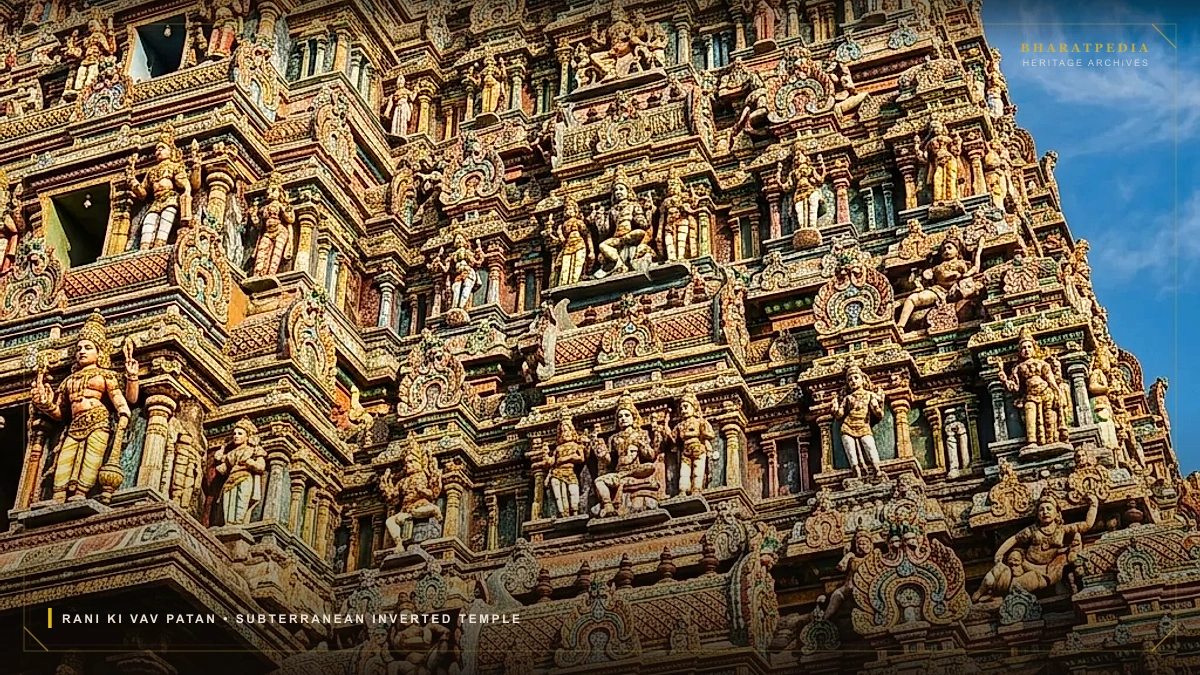
Rani Ki Vav at Patan: The Subterranean Inverted Temple of Gujarat
The subterranean masterwork of Rani Ki Vav in Patan, Gujarat: Queen Udayamati's 11th-century stepwell, designed as an inverted temple descending seven tiers into the earth, with over 500 sculptures of Vishnu's Dashavatara.
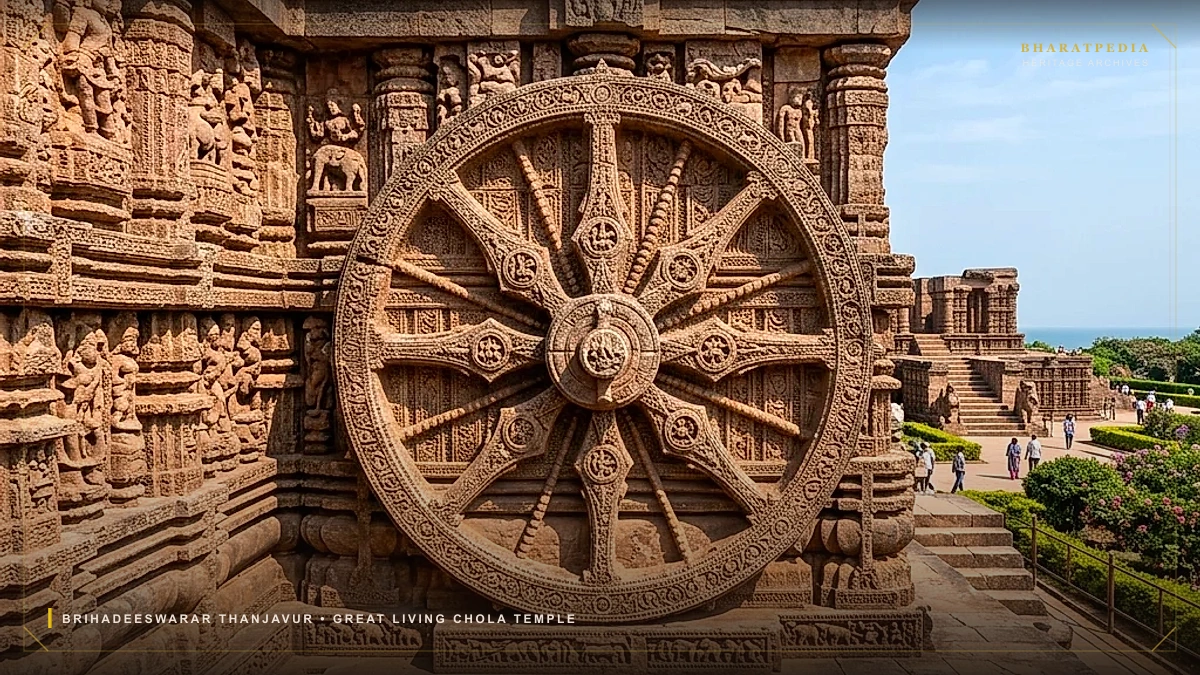
Brihadeeswarar Temple of Thanjavur: The Granite Titan of Chola Architecture
The engineering triumph of the Peruvudaiyar Kovil at Thanjavur: Rajaraja Chola's 66-meter mortarless granite vimana, the 81-tonne monolithic capstone hoisted via a 6 km earthen ramp, and 1,000 years of living Shaivite worship.